
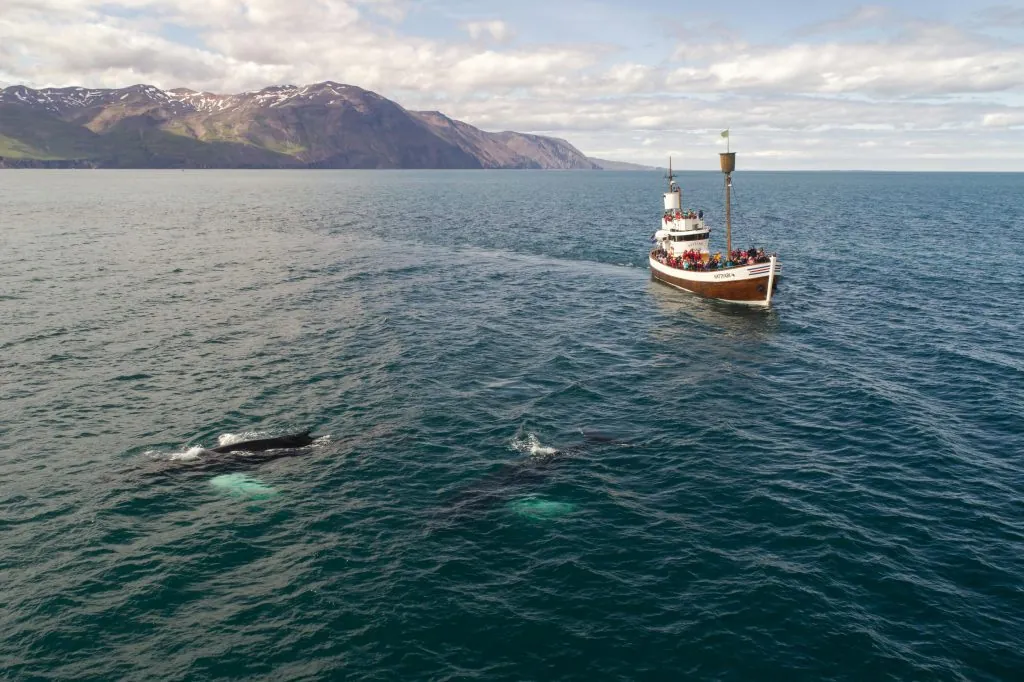
Whale watching in Iceland is not just another excursion. It is one of those moments in travel that lingers long after you return home. The stillness of the sea, the crisp northern air, and the sudden thrill as a humpback breaches the water or a tail flicks above the waves. These are the memories that stay with you.
In This Guide
- When to go
- Where to watch
- Why the timing matters
- FAQs About Whale Watching in Iceland
- A travel tip
- Month by Month: When Are You Most Likely to See Whales?
- Húsavík or Reykjavik: Which Should You Choose?
- What to Wear and What to Expect on the Water
- What if You Do Not See a Whale?
- How to Combine Whale Watching with a Wider Iceland Trip
When I plan Iceland trips that include whale watching, the first thing I ask clients is whether they want it to be the highlight of the trip or a pleasant addition. The answer changes everything. For clients who want it to be the main event, I always recommend building in a night in Husavik - Iceland's whale watching capital - rather than treating it as a day trip from Reykjavik. The Husavik bay sits on a natural feeding ground, sighting rates are consistently higher, and the town is genuinely charming. A family I sent there last June came back saying the humpback encounter was the thing their children talked about for months afterwards.
When to go
The peak season for whale watching in Iceland is from April to October when the waters are rich with food and migrating whales gather in impressive numbers. Humpbacks, minke whales and dolphins are the most common sightings, while orcas are most likely in spring.
If seeing the majestic blue whale is your dream, plan to visit in June or July. The summer months also bring calmer seas, long daylight hours and the magic of the midnight sun, creating the perfect setting for time on the water.
Where to watch
Most visitors join tours either from Reykjavik or from Húsavík in the north, which is often called the whale watching capital of Iceland. Húsavík has an excellent track record of sightings, while Reykjavik offers the convenience of adding whale watching to a short break in the city. Both locations benefit from expert guides who bring the experience to life with their knowledge and enthusiasm.
Why the timing matters
Planning your trip for the right time of year greatly increases your chances of seeing whales up close. Winter tours are available but the conditions are more challenging and sightings are less frequent. If whale watching is the highlight of your Iceland adventure, the spring and summer months are by far the best choice.
You Might Also Like
FAQs About Whale Watching in Iceland
Where is the best place in Iceland for whale watching?
Húsavík on the north coast is Iceland's whale watching capital - it has been running tours for decades and consistently has the highest sighting rates. Reykjavík runs tours from the Old Harbour too, which is convenient if you're based in the capital. For humpbacks specifically, Skjálfandi Bay near Húsavík is outstanding from May through August.
What whales can you see in Iceland?
Minke whales are the most commonly spotted year-round. Humpback whales arrive from May and are the showstoppers - breaching, tail-slapping, and generally being magnificent. White-beaked dolphins are seen frequently, and if you're lucky you might also spot blue whales (the world's largest animal) from June onwards. Orca sightings are rarer but do happen.
What if I don't see any whales?
Reputable operators in Húsavík typically offer a free return trip if you don't spot any cetaceans - it's worth checking this when booking. Sightings rates are genuinely high in peak season, but nothing in wildlife is ever guaranteed, and I think that's part of what makes it special.
How long does a whale watching tour last?
Most tours run for two to three hours from Húsavík. The traditional wooden schooner tours are a beautiful way to do it - slower and more atmospheric than the rigid inflatable boats, though the latter can reach areas further out to sea. Dress warmly regardless of the season; it's always cooler on the water.
A travel tip
Many travellers choose to combine whale watching with other highlights of Iceland such as the Golden Circle, the Blue Lagoon or heading north to experience the midnight sun. I can create a tailor made itinerary that allows you to weave these extraordinary experiences together effortlessly.
An insider’s note. I work with partners in Iceland who know the waters intimately. These are the guides who can spot a spray in the distance long before anyone else notices. That level of expertise and care is what makes a trip both seamless and unforgettable.
Why Plan Your Holiday With Me?
I'm Rachael. I plan tailor-made holidays for curious travellers who love comfort. New experiences, lovely places to stay and someone looking after the details.
Design
I listen first, then shape your holiday around what you enjoy and what makes you comfortable. From the route to your room, with time to explore and time to relax.
Discover
With trusted specialists and local experts, I find distinctive places to stay and experiences that help you get to know a destination, chosen around your interests.
Travel well
I contact your hotels before you arrive, reconfirm your stay and share your preferences. I ask about upgrades and thoughtful extras where available, and support you until you're safely home.
Month by Month: When Are You Most Likely to See Whales?
The short answer is June and July for the greatest variety and the best sighting rates. But the longer answer is more useful — because the type of whale you want to see makes a real difference to when you should go.
| Month | Whales most likely seen | Conditions & verdict |
|---|---|---|
| April – May | Minke whales, early humpbacks, orcas (most active) | Season begins. Fewer tourists, smaller boats, quieter experience. |
| June – July | Humpbacks, minkes, white-beaked dolphins, blue whales (from Húsavík) | Peak season. Long daylight; evening tours in golden light. |
| August – September | Humpbacks, minkes, dolphins | Still excellent. Clearer skies, fewer crowds, first hints of autumn. |
| October | Tapering humpback & minke sightings | Possible from Húsavík; conditions less predictable. Worth combining with autumn Iceland. |
| November – March | Rare sightings only | Tours run but conditions are tough. Wait unless winter Iceland is your priority. |
Húsavík or Reykjavik: Which Should You Choose?
Both are excellent - but they suit different kinds of trips, and it is worth being honest about the difference.
Húsavík is the dedicated whale watching capital of Iceland for good reason. Sighting rates here are among the highest in Europe, sometimes reaching 98% in peak season. The town is entirely shaped around the experience - there is a brilliant whale museum, genuine local expertise, and a sense that this is what Húsavík does best. If whale watching is the reason you are going to Iceland, Húsavík deserves to be your base for at least a night or two.
Reykjavik makes sense if you are on a shorter trip or combining whale watching with a city break. Faxaflói Bay is productive for minkes and harbour porpoises, and the convenience of sailing from the capital is hard to argue with. Sighting rates are lower than Húsavík, but you are still more likely to see something than not, particularly between May and September.
My suggestion: if you can get to both, do. It takes roughly four and a half hours to drive from Reykjavik to Húsavík, and the route through the north of Iceland is reason enough to make the journey.
What to Wear and What to Expect on the Water
The sea off Iceland is cold. Even in July, when the land feels warm, the wind on the water cuts through quickly. Most reputable operators provide thermal suits or waterproof overalls - check whether yours does before you book, and if not, layer up regardless.
Underneath, think base layer, a mid layer, and a waterproof on top. Bring gloves, a hat, and wind protection for your face. You will thank yourself.
As for seasickness - the bay conditions in peak summer are usually calm, but open water can be bumpier. If you are at all susceptible, take precautions the night before rather than waiting to see how you feel. Sea bands, ginger tablets and over-the-counter medication all help. Most operators will let you know in advance if conditions look rough, and good ones will give you the option to reschedule.
What if You Do Not See a Whale?
Most tour operators in Iceland offer a free repeat trip if you do not spot a whale - and genuine operators mean it. In peak season, sightings are so reliable that the guarantee rarely needs to be called upon. But it is always worth asking before you book.
What I would say is this: even on a tour where whales are elusive, the experience of being out on the water around Iceland is something in itself. Puffins, gannets, dolphins, seals - there is always something worth watching. Whale watching in Iceland is never just about the whales.
How to Combine Whale Watching with a Wider Iceland Trip
Whale watching works beautifully as part of a longer Iceland itinerary - it sits naturally alongside the Golden Circle, the lava fields, the hot springs and the coastal drives that make Iceland such a complete destination.
A week gives you enough time to do Reykjavik, the Golden Circle and Húsavík properly. Two weeks opens up the Ring Road, the Westfjords and the incredible emptiness of the interior. If you are planning Iceland from scratch, have a look at my guide to what to do in Iceland - it covers the whole country and will help you decide where whale watching fits into your trip.
Planning the right time of year for whale watching also tends to align well with the rest of what Iceland offers. Summer brings the midnight sun and accessible roads. Spring offers the tail end of the Northern Lights alongside the start of whale season. Autumn delivers quieter roads and dramatic skies.