
Most people choose one. Corsica or Sardinia. But the two islands sit just twelve kilometres apart, and together they make one of the finest two-week holidays in Europe. One wild and dramatic, one warm and welcoming. The crossing between them takes about an hour. This is the guide to combining them properly, including the ferry, a suggested itinerary, and how I can take care of every detail.
In This Guide
- Two Islands That Couldn’t Be More Different
- What Makes Corsica Worth the Journey
- What Makes Sardinia Worth the Journey
- Getting Between Corsica and Sardinia
- How Long Do You Need to See Both Islands?
- Is This Trip Right for Families? And for Couples?
- How I Can Help You Book This
- FAQs About Corsica and Sardinia Holidays
In This Guide
Most people pick one. Corsica or Sardinia. French or Italian. Wild or refined.
And most people, having picked one, spend the entire trip wondering about the other.
Here’s something worth knowing. The two islands are just twelve kilometres apart at their closest point.
The crossing between them takes about an hour. And yet most travellers never make it between the two. Not because it’s difficult, but because planning a two-island trip across two countries, with flights, ferries, hire cars, hotels and a crossing in the middle, takes a level of research that most people don’t have time for. So they pick one island, enjoy it, and spend the whole trip quietly wondering about the other one.
This is the guide to doing both properly. And at the end, I’ll explain how I can take care of every detail so you don’t have to.
I’ll take you through what makes each island special, why they work so beautifully together, how to get between them with or without a hire car, and how long you actually need to see both without feeling rushed. There’s a suggested itinerary, and I’ll explain how I can take care of every detail, from your flights to the ferry to the hotel on the other side.
A Corsica and Sardinia holiday is one of the finest two-week trips in Europe. It just needs someone to put it together properly.
Two Islands That Couldn’t Be More Different
Corsica and Sardinia are neighbours with completely separate personalities, and that’s what makes combining them so good.
Corsica belongs to France, but it doesn’t feel French in the way you’d expect. The island has its own language, closer to Italian than French, its own food, and a fierce sense of independence that runs through everything. The interior is mountainous and wild. Dense forests, river gorges that run turquoise in summer, peaks that carry snow well into spring. The coastline is dramatic rather than manicured: wild coves tucked between orange granite outcrops, where the water shifts from pale green to deep indigo within metres.
Corsica is a place that rewards curiosity. The more you explore, the more it gives back.
Sardinia belongs to Italy, but again entirely on its own terms. The Sardinian dialect is distinct enough that linguists sometimes classify it separately. The food is magnificent. And the beaches are genuinely among the finest in the world. Not ‘nice for Europe’ but genuinely world-class. La Pelosa in the northwest. The Maddalena Archipelago. The wild eastern coast around Baunei. Powder-white sand and water that photographs in shades of turquoise the Caribbean would be proud of.
Where Corsica pulls you inward, into mountains and gorges and villages that feel undiscovered, Sardinia stretches you out along its coast.
One island sharpens your senses. The other soothes them.
Ready to start planning?
Fill in my enquiry formWhat Makes Corsica Worth the Journey
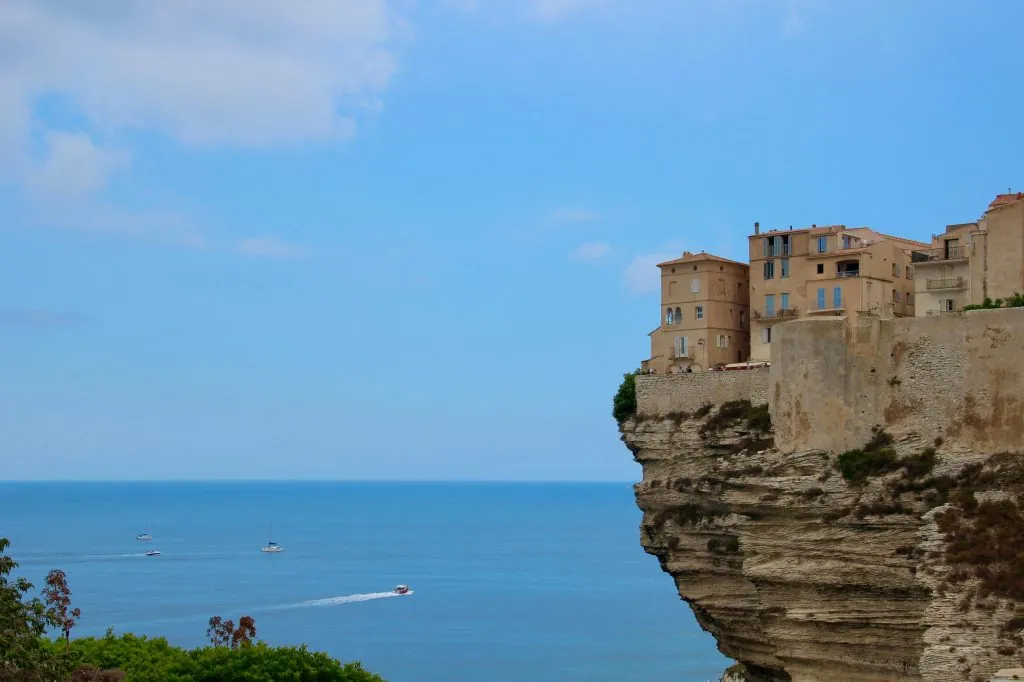
A medieval citadel balanced on chalk cliffs at the island’s southern tip, looking out across the Strait towards Sardinia. It feels like it was placed there deliberately to make you stop and stare. Which it will.
The Calanques de Piana on the west coast are a UNESCO World Heritage Site: enormous orange granite formations dropping vertically into turquoise water. Driving through them at dusk, when the light turns everything amber and rose, is one of those travel moments you carry home with you.
The interior is underestimated by most visitors. The Gorges de Spelunca are spectacular. The mountain village of Evisa, perched above the gorge, has a quietness that feels genuinely remote. The island’s narrow-gauge railway, the Trinighellu, threads through mountain scenery between Ajaccio, Corte, and Bastia that most travellers never reach by road.
Ajaccio, the capital, has an elegant French quality softened by Corsican warmth. It’s Napoleon Bonaparte’s birthplace, which lends a certain footnote to a coffee in the old port. Calvi in the north has a Genoese citadel and one of the island’s finest sandy beaches.
And then there’s the food. Corsican charcuterie, wild boar, coppa, lonzu, is extraordinary. Aged brocciu cheese. Chestnut flour pastries. Honey that tastes of the maquis, the dense aromatic scrubland that covers much of the island and gives Corsican air its distinctive scent.
What Makes Sardinia Worth the Journey
If Corsica is the island that tests you a little, Sardinia is the island that welcomes you.
The hospitality is warm and easy. The pace is unhurried. And those beaches really do need to be seen.
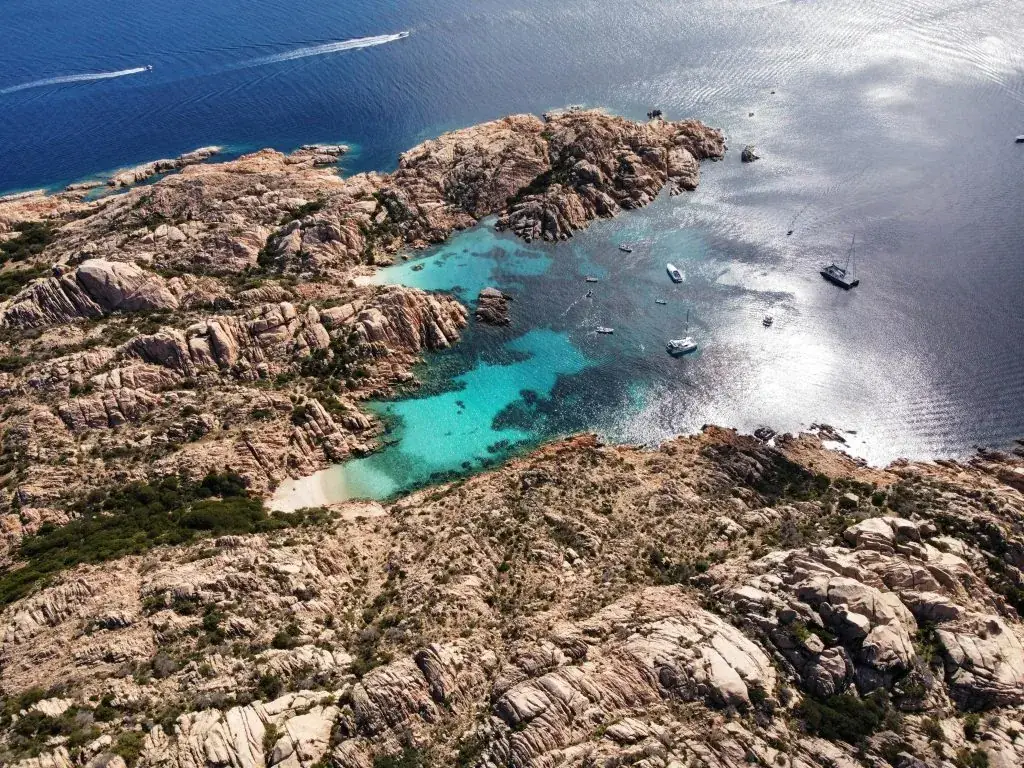
The Maddalena Archipelago is a national park off the northeastern coast, reachable only by boat. Seventeen islands, dozens of beaches, water in colours that look filtered even when they’re not. A boat trip through the archipelago is the kind of experience families talk about for years. It also works for everyone, young children, teenagers, couples wanting a quietly perfect afternoon. The sea has that effect.
Alghero, on the northwest coast, has a character entirely its own. Settled by Catalans in the fourteenth century, it still feels distinctly Spanish: bilingual street signs, a harbour lined with restaurant tables, and lobster pasta that is genuinely one of the finest things you can eat anywhere in the Mediterranean.
Cagliari, the capital, is often skipped by visitors who fly in and head straight to the coast. This is a mistake. The Castello district rises above the city like a medieval fortress, with views stretching down to the lagoons where pink flamingoes feed, entirely unbothered by everything around them. Worth a morning at minimum. Worth an evening for the aperitivo culture alone.
And the food throughout Sardinia is what many visitors remember most. An agriturismo lunch, long and abundant and unhurried, course after course arriving on a table under a pergola, is one of those meals that genuinely recalibrates your sense of what eating well means.
For an overview of Sardinia’s regions before you start planning, the official Sardinia tourism website is a good starting point.
Getting Between Corsica and Sardinia
This is the part that puts people off. It really shouldn’t.
The crossing between Bonifacio in southern Corsica and Santa Teresa Gallura in northern Sardinia takes approximately one hour. It’s one of the shortest international ferry crossings in the Mediterranean.
If you’re hiring a car
While many travellers worry about the logistics of moving a vehicle between two countries, I design this trip to be entirely friction-free.
Most standard rental agreements forbid taking a vehicle between France and Italy, and insurance often voids the moment you hit the ferry deck.
I solve this with a “Seamless Handover” approach.
You’ll enjoy the freedom of your own vehicle in Corsica, drive right to the harbour in Bonifacio, and simply leave the car there. After a beautiful one-hour crossing as a foot passenger (with no narrow ferry ramps to navigate), a fresh car will be waiting for you on the other side in Sardinia.
It gives you the total continuity of a road trip without the insurance red tape or the anxiety of ferry boarding.
If you’d prefer not to drive
I’ll be honest: exploring Corsica and Sardinia without a car is more challenging. It’s possible, but your options are more limited and it takes more planning, so it’s worth going in with clear eyes.
On public transport. Buses and trains are Corsica’s main forms of public transport, linking the principal towns with services that run more or less frequently depending on the season.
By bus. Buses run between Bastia and Ajaccio (via Corte), Ajaccio and Porto Vecchio (via Sartène, Propriano and Bonifacio), and Porto Vecchio and Bastia, with a connection to Macinaggio in Cap Corse. There are also routes across the Alta Rocca in the south and around Porto.
The catch is that different companies run different routes, so timetables are scattered and can be genuinely tricky to piece together. Working all of that out, and shaping a realistic car-free itinerary around what the buses actually allow, is exactly the kind of thing I take off your plate.
How Long Do You Need to See Both Islands?
A Corsica and Sardinia holiday needs a little room to breathe. I’d suggest ten to twelve nights, split fairly evenly between the two islands, with the ferry crossing roughly in the middle. That gives you time to settle into each place rather than packing up and moving every couple of days.
Less than ten and you’ll find yourself moving just as you’re settling in. More than twelve and you have space to slow right down and stay longer somewhere that’s won you over. Both are fine reasons to adjust the plan.
Here’s how I’d think about twelve nights. This is a starting framework, not a fixed itinerary. It shifts depending on what matters most to you.
Nights 1 to 3: Ajaccio and the west coast of Corsica
Arrive into Ajaccio. Spend the first morning in the old port with no particular agenda. On day two, take the coastal road north to the Calanques de Piana. This is one of the most dramatic drives in Europe and it earns a full day. Day three works well for the Alta Rocca highlands to the south, or for doing very little, which Corsica is also excellent for.
Nights 4 and 5: Bonifacio
Drive south to Bonifacio. Two full days here, because it earns them. Walk the old town in the morning. Take a boat trip to the sea caves and the lighthouse in the afternoon. Find a table above the cliffs at dusk and eat slowly. This is Corsica at its most theatrical.
Day 6: The crossing
An hour on the water, the cliffs of Bonifacio behind you and the coast of Sardinia ahead. It feels, correctly, like a significant moment in the trip.
Nights 6 to 8: Northern Sardinia and the Maddalena Archipelago
Base yourself around Palau or La Maddalena. The boat trip through the archipelago is the centrepiece. Give it a full day. The water here is the thing, and everything else is an added bonus.
Nights 9 and 10: Alghero
Drive west to Alghero. The old town is small enough to feel immediately familiar. Take the boat to Neptune’s Grotto just south of the town. Find the lobster pasta. You’ll understand why I keep mentioning it.
Nights 11 and 12: Cagliari
Head south for the final stretch. The Castello district in the morning, the lagoons in the afternoon, a long dinner in the Marina quarter. Fly home on day thirteen feeling like the trip moved at exactly the right pace.
Is This Trip Right for Families and Couples?
It works for both. Genuinely. For different reasons.
For families
Corsica offers the drama that older children respond to: boat trips into sea caves, the cliffs at Bonifacio, mountain roads that make even teenagers look up from their phones. Sardinia offers the ease, shallow and calm water particularly in the north, beaches that genuinely delight, and the Maddalena Archipelago boat trip that is one of the finest family experiences in the Mediterranean.
For families with younger children, I’d lean the itinerary towards Sardinia, spending more time in fewer places. Fewer long drives. More mornings where the whole agenda is the beach, lunch, and the beach again.
The ferry crossing is an event in itself for children. It makes the trip feel like a proper adventure rather than just a flight-and-beach holiday.
If you’re planning this as a family holiday and want help working out the right shape for your children’s ages, drop me a message and I’ll ask you the right questions.
For couples
For couples, the contrast between the two islands is genuinely the best part. Corsica is wild and edged and slightly demanding, in the way that the most memorable travel often is. Sardinia is warm and sensory and generous.
Together they give you the kind of trip that produces genuinely different memories. The afternoon you drove through the Calanques in fading light. The morning you took a boat to a deserted beach in the archipelago. The dinner in Alghero where the bottarga pasta was better than anything you’d eaten all year.
Flying into one island and out of the other suits couples particularly well. You arrive in Corsica, travel through both islands in one flowing direction, and fly home from Sardinia. The holiday always moves forward, no retracing, no repeated roads. Just two islands, beginning to end.
The Blue Turtle Escapes Difference
I'm Rachael, and booking through me costs you nothing.
Here is what it adds.
Design
I listen first. How you travel, what you've loved before, what you'd rather avoid. Then I design your holiday with you. You work with one person, start to finish.
Discover
I work with 200 trusted partners who have actually been there. I pick the right ones for you, then work closely with them on every detail.
Travel well
Before you arrive, I tell the people looking after you what matters to you. And you have my support from when you first contact me until you're home.
How I Can Help You Book This
A Corsica and Sardinia holiday has more moving parts than most trips, and that’s exactly the kind of thing I enjoy getting right.
Two islands. Flights arranged so you arrive at one end and leave from the other. Hotels that fit your style across four or five locations. A ferry crossing sorted properly, with or without a vehicle permit. Hire cars coordinated so the handovers are simple. Or a car-free itinerary designed around the railway and private transfers, if that suits you better.
When you get in touch, we start with a conversation. Not a quote request, not a list of options to choose from. A proper conversation about what you want from this holiday, how you like to travel, what pace feels right, and what would make this feel genuinely extraordinary rather than just a nice trip. That conversation shapes everything.
From there I take care of it. Hotels chosen for the right reasons, not just because they’re popular. A personalised travel guide for each island, built around what you actually want to find. And before you leave, I call your hotels. Not to reconfirm the booking, which anyone can do, but to make sure the people looking after you know you’re coming, know what the trip means to you, and are ready to make it feel like that. If there’s an occasion to mark, a birthday, an anniversary, a trip that’s been a long time coming, that call is where it happens quietly in the background. A bottle of something local waiting in the room. A note. The small things that turn a good holiday into the one you talk about for years.
My background is in security and risk management, which means I think about holidays differently. The things that could go wrong on a trip like this, I’ve already worked through before you leave. You won’t have to.
“If you are looking for a travel designer who truly listens and then over-delivers, look no further than Rachael Waller at Blue Turtle Escapes. We first worked with Rachael for a trip to Dubrovnik last April. From start to finish, her planning was absolutely superb. She handled every single detail, allowing us to simply show up and enjoy a fantastic holiday. We were so impressed with her professionalism and eye for detail that there was no question about who to call for our next big milestone.”
Steve
If you’ve been thinking about this trip, let’s talk. Fill in my enquiry form and tell me a little about what you’re looking for. I’ll ask you the right questions, and from there I’ll design something that fits exactly how you like to travel. No obligation, no pressure, and no endless back-and-forth with booking sites. Just one conversation, and a plan that’s actually built around you.
You Might Also Like
- Greek island hopping holidays
- wine tasting in Italy
- where to stay in Lake Como
- twin-centre holidays guide
FAQs About Corsica and Sardinia Holidays
Do I need to hire a car for this trip?
A hire car transforms both islands, and I'd always recommend having one. The best beaches, viewpoints and mountain villages are all reached by road, and the drives themselves are part of the experience. The one thing most people don't realise is that standard rental agreements typically forbid taking a vehicle between France and Italy on the ferry. Rather than navigating that, I arrange what I call a Seamless Handover: a hire car on each island, coordinated so the changeover in Bonifacio is effortless. You drive to the harbour, cross as a foot passenger, and there's a fresh car waiting on the other side in Sardinia. No insurance headaches, no ferry ramps, no anxiety. Just the trip.
When is the best time to visit Corsica and Sardinia?
May, June and September are ideal. The sea is warm, the roads are quiet compared to July and August, and you can actually park near the beaches. July and August are stunning but very busy - prices rise, ferries fill up, and the best spots get crowded. If school holidays mean you must go in summer, I'll still make it work.
How do you get between the two islands?
The most straightforward route is the Bonifacio to Santa Teresa Gallura crossing, which takes about an hour. Moby Lines and Ichnusa Lines operate it, with multiple sailings a day in summer and a reliable year-round service. I sort all ferry bookings as part of the trip, so you don't have to navigate operators, timetables or vehicle permits yourself.
How long do you need for both islands?
I'd suggest a minimum of ten nights - roughly five on each island. That gives you time to breathe, explore at a sensible pace, and not feel like you're rushing from one scenic viewpoint to the next. Twelve nights is even better if you can manage it.