
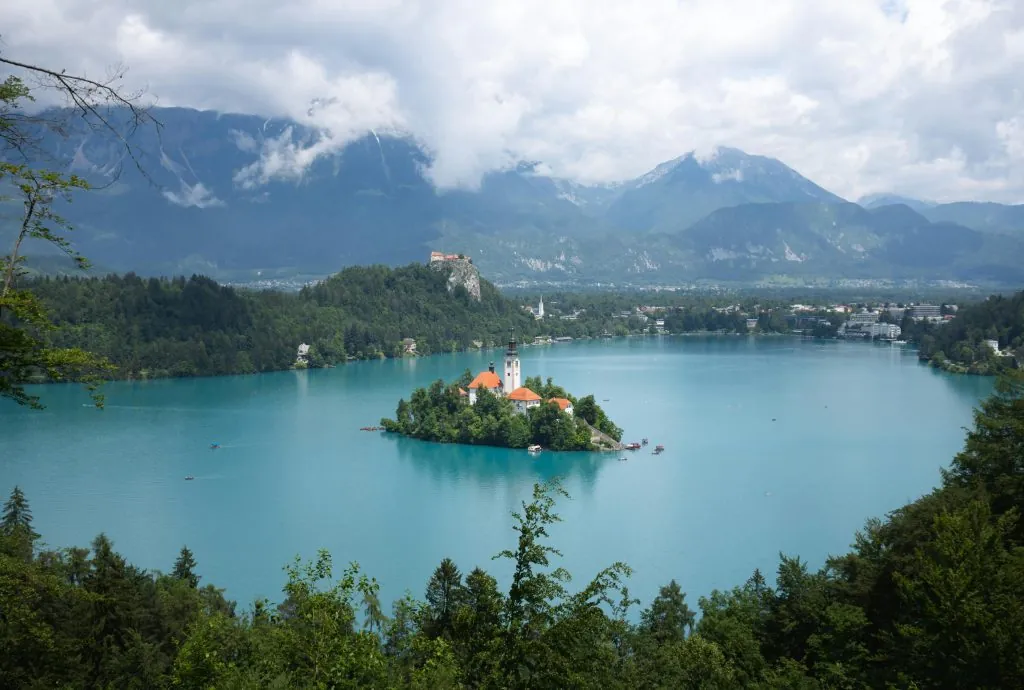
The planning guide for people who want to get it right. How long to stay, what order to do it in, what it actually feels like to be there, and how I can take care of every detail for you.
In This Guide
- How Long Should Holidays in Lake Bled Actually Be?
- Ljubljana First or Lake Bled First?
- Two Nights in Ljubljana: What to Expect
- Ljubljana with Children
- Getting from Ljubljana to Lake Bled
- What Holidays in Lake Bled Actually Feel Like
- Holidays in Lake Bled with Children: What Actually Works
- Who Holidays in Lake Bled Are Really For
- Should You Add Extra Days to Your Lake Bled Holiday?
- Practical Things to Know for Holidays in Lake Bled
- FAQs About Lake Bled and Ljubljana Holidays
- How I Can Help You Plan Holidays in Lake Bled
Table of Contents
There is a particular quality to the light at Lake Bled in the early morning, before the day visitors arrive. The water is so still it holds the island church and the mountains above it like a mirror, and the only sound is the church bell carrying across the lake and the dip of oars from a wooden pletna boat. It is the kind of place that photographs do not do justice to. Not because the photographs are inaccurate, but because they cannot capture the quiet.
I know that quiet because I have been there. An interrail trip years ago: I camped beside the lake, swam in it, came back to Ljubljana and walked its streets for two days. I remember the street art around Metelkova more clearly than most of what I saw on that whole journey. These are not destinations that leave you quickly.
What this guide is for is the planning. The decisions that shape whether holidays in Lake Bled and Ljubljana are good or genuinely brilliant. How long to stay. Which destination to start with. How to get between them. What each place actually feels like to be in, rather than what the photographs suggest. I have kept nothing back.
How Long Should Holidays in Lake Bled Actually Be?
This is the most important question to get right before you book anything, because most people get the balance wrong and it shapes the whole trip.
The most common mistake is treating Lake Bled as a day trip from Ljubljana. You can do it, the bus takes a little over an hour, but you will arrive mid-morning with the coach groups, tick off the island, the castle and the cream cake, and leave having confirmed that the photographs were accurate. That is an expensive afternoon at a famous view. It is not holidays in Lake Bled.
The second mistake is giving Ljubljana and Lake Bled equal time. They are not equal destinations, and I say that as someone who genuinely loves Ljubljana. Two nights in the city gives you everything it has to offer. The lake needs at least three, and four is the sweet spot I most often recommend.
The reason is this: the lake reveals itself across multiple days, not one. The morning before the day visitors arrive, which you only get if you are staying there. The second time you walk the lake path, which is slower and better than the first. The afternoon where nothing particular happens and turns out to be the afternoon you remember most. These things require time.
Ready to start planning?
Fill in my enquiry formLjubljana First or Lake Bled First?
Ljubljana first. Almost always, and for reasons beyond the practical.
The practical reason is that the airport sits between the city and the lake. Flying in and heading straight to Bled means carrying your luggage past where you need to be. Starting in Ljubljana is simply how the geography works.
But the better reason is this. Ljubljana is a wonderful place to arrive in a country you have not visited before. It is compact, easy to read, excellent for food and evenings, and genuinely interesting without being overwhelming. By the time you leave for the lake after two nights, you have a feel for Slovenia. You arrive at Lake Bled ready for it.
Ending in Ljubljana also works well in practice. Good restaurants, a relaxed final evening, and an easy transfer to the airport in the morning. It is a gentle way to finish a trip rather than rushing from the lake to a departure gate.
There is a third option that I think is underrated: the Lake Bled sandwich. Two nights in Ljubljana, three or four nights at the lake, then one final night back in Ljubljana before you fly home. It sounds like unnecessary back-and-forth, but it works beautifully. The second time you arrive in the city you know it already. You have a favourite restaurant, you know which bridge to walk across in the evening, you are not orienting yourself. It becomes a proper last night rather than a transit. Going back to the city after the lake feels natural rather than anticlimactic, because you are returning rather than retreating. It is the itinerary I would choose for myself.
Two Nights in Ljubljana: What to Expect
Ljubljana surprises people. Most arrive not quite knowing what to expect and leave wondering why it does not get more attention. In 2026 it still has the quality of somewhere that has not been entirely taken over by tourism. The cafes have actual locals in them, and the market is a real market rather than a tourist performance.
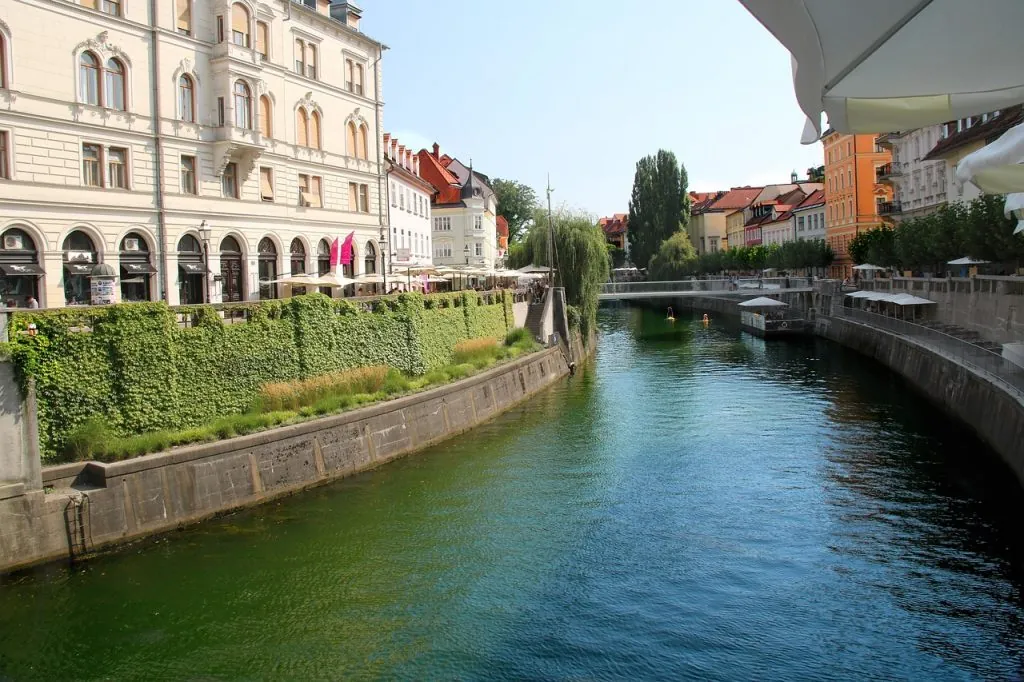
The old town is walkable end to end in about twenty minutes. That is a strength, not a limitation. Your time there is spent experiencing things rather than moving between them. The Ljubljanica River runs through the centre and the whole city gravitates towards it in the evenings.
Day One
The Central Market in the morning is a good start. It runs along the riverbank, local producers bring vegetables, cheese, bread and mushrooms, and it is somewhere the city actually shops. Worth an hour before you move on.
Walk the old town at your own pace. The triple bridge, the Baroque fountain, the streets that keep producing a pleasant view around the corner. Take the funicular up to Ljubljana Castle in the late morning and stay long enough to look properly. The views from the terrace stretch across the Ljubljana Basin to the Julian Alps in the distance. Those mountains are where you are headed next, and it is worth standing there for a moment.
One thing Ljubljana has that most guides underplay is the street art. The city has a genuine street art culture, particularly around the Metelkova area. It is creative, a little irreverent, not performing for visitors. I remember it more clearly than most of what I saw on the interrail trip that took me there, which is usually the test of whether something is worth mentioning.
Evenings are easy and genuinely pleasant. The riverbank fills up naturally from about seven, the restaurants are good, and the prices are considerably kinder than most Western European capitals.
Day Two
A slower day. The National Museum of Slovenia is worth a couple of hours if you want some context for the country before you head north. Tivoli Park is large, green and very good for an unhurried morning. If you want to go further, Postojna Cave is an hour south, one of the largest cave systems in Europe, and the scale of it is genuinely impressive. Book ahead if you go.
Your last evening in Ljubljana before heading to the lake is a good one. Find somewhere on the river, take your time over dinner, and look forward to the morning.
Ljubljana with Children
Ljubljana is underrated as a family destination and I want to say that clearly rather than burying it in a list. The Dragon Bridge is exactly as exciting as it sounds to a child who is interested in large bronze dragons, which in my experience is most children. The Ljubljana Zoo is inside Tivoli Park and is genuinely well done. The Natural History Museum has real dinosaur bones and is designed in a way that works for children who are not yet enthusiastic about wall panels.
The city centre is almost entirely pedestrianised, which makes moving around with children much less stressful than in most European cities. The little electric vehicles that ferry people around the old town are a source of great delight for younger children, and quietly useful for everyone else.
Getting from Ljubljana to Lake Bled
Lake Bled sits about 55 kilometres northwest of Ljubljana. The road takes you through forested hills that gradually rise into proper alpine scenery until the valley opens and Bled appears below you. Those last few kilometres are the ones people mention. It is a good arrival.
Private Transfer This is what I arrange for most of my clients. A private car from Ljubljana, or directly from the airport on arrival day, gets you door to door with no luggage logistics and no bus station navigation. The drive through the Julian Alps is genuinely beautiful and worth experiencing without the cognitive load of following signs. For families especially, it removes a layer of unnecessary effort from what should be a relaxed journey. I include this as part of the booking.
Bus Reliable and affordable at around €7 one way. Services run regularly from Ljubljana bus station and drop you in the centre of Bled, a short walk from the lake. If you are travelling light and independently, this works perfectly well.
Hire Car The right choice if you want to explore beyond the lake. Triglav National Park, Lake Bohinj, Vintgar Gorge and the Soča Valley are all significantly more accessible with your own car. Parking near the lake fills up quickly in summer, so I always book accommodation with parking sorted or note the designated areas nearby.
Train A train runs, but the most frequent weekday service requires a change at Jesenice, and the nearest station is about 5 kilometres from the lake. On weekends there is a direct service to Bled Jezero. Unless you have a specific reason, the bus is the simpler choice.
What Holidays in Lake Bled Actually Feel Like
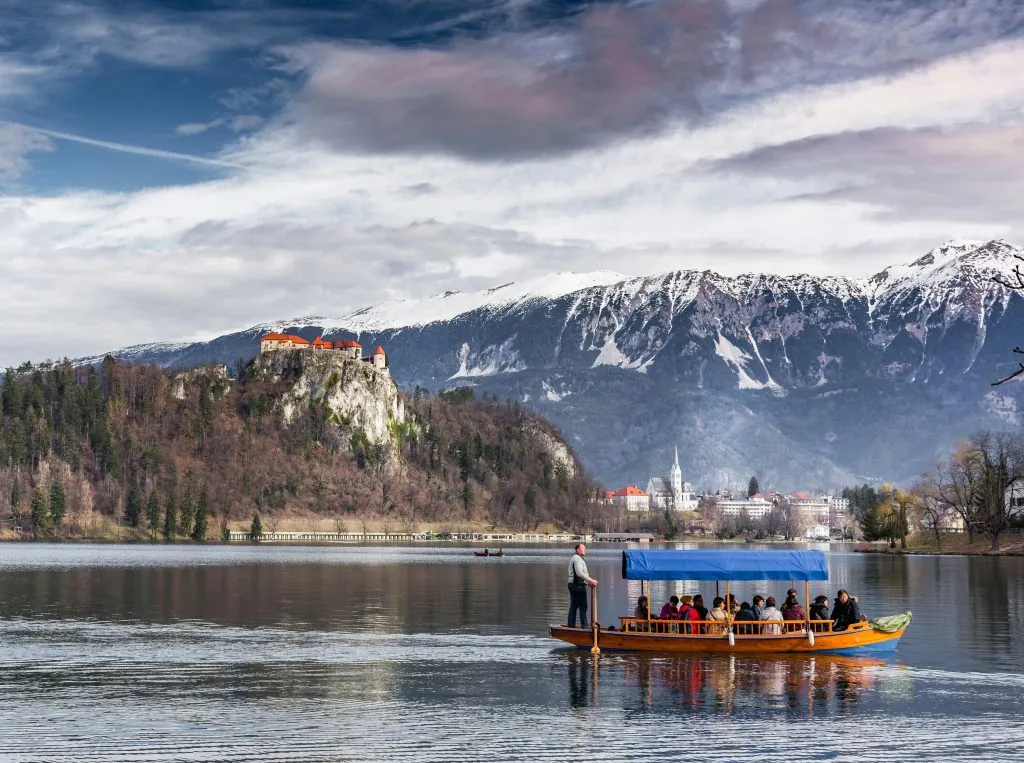
The photographs are accurate. The colour of the water, the island, the castle on the cliff, the mountains sitting behind everything: it genuinely looks like that when you arrive. Knowing what to expect does not reduce the effect of seeing it for the first time.
What the photographs cannot show is the quiet. Motor boats have been banned on Lake Bled since the 1980s. The result is a famous destination that is somehow peaceful. You hear birdsong. You hear the church bell carrying across the water. You hear the dip of pletna boat oars. On a still morning before the day visitors arrive, it sounds like somewhere that has been left alone. That quality is rare in a place this beautiful and this easy to reach, and it is the main reason I keep recommending it.
The town itself is small and alpine. Good restaurants, a few excellent hotel spas, a bakery culture built around one very specific cake. The lake is swimmable in summer and I can tell you from experience that it is cold and completely invigorating. Not Mediterranean warm. Alpine cold, the kind that makes you feel very much alive for the rest of the day. The swimming beach at Hotel Park is the obvious spot, free to use, and the water is clear enough that you can see the bottom.
The Pletna Boat
A flat-bottomed wooden boat rowed by a pletnar who stands at the stern, using a technique passed down through the same families since the 12th century. There are 23 licensed families. The licence goes from father to son. The boats are handbuilt.
The crossing takes about twenty minutes each way. This is not a tourist attraction in the way that phrase usually means. It is something that has been happening for eight hundred years, and you are spending forty minutes being part of it. I build it into every itinerary on the first morning, before the day visitors arrive.
Ninety-nine stone steps up to the church at the top of the island. Ring the wishing bell. The view back to the castle from water level is one of the best perspectives on the lake.
The Kremšnita
Invented at the Park Hotel in 1953 by a pastry chef called Ivo Seljak, protected by designation of origin since 2011, sold nowhere else in the world. Puff pastry, vanilla custard, whipped cream, seven centimetres square. Over eighteen million have been sold at the Park Hotel alone. You will have one by the lake.
Vintgar Gorge
Ten minutes by road from Bled. A 1.6 kilometre walk through a glacially carved gorge on wooden walkways, past waterfalls, emerald pools and river rapids. The entrance is a few euros and going early makes a significant difference. I note the timing in every guide I send clients for this trip.
Bled Castle
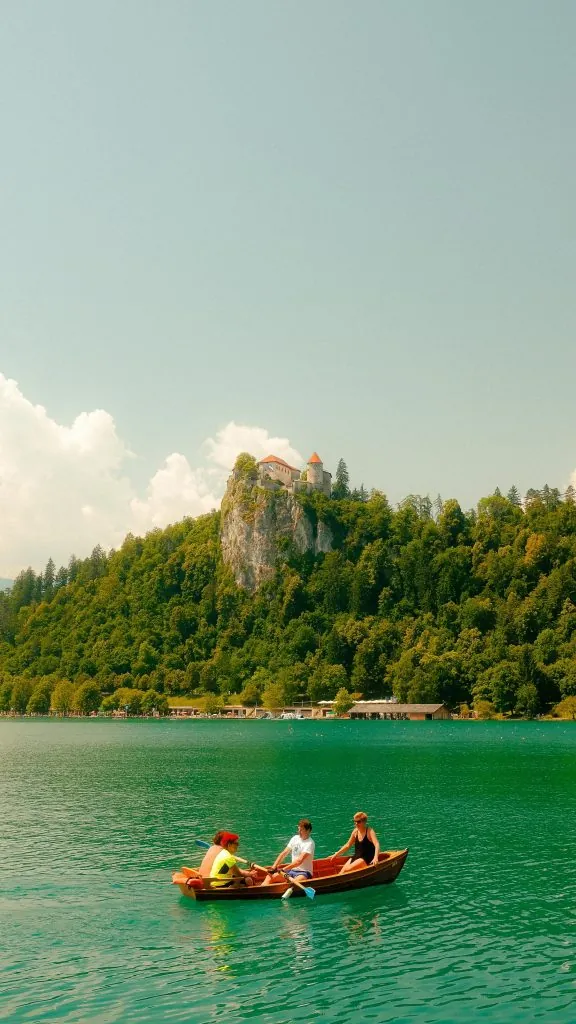
The oldest castle in Slovenia, first recorded in 1011, sitting 130 metres above the lake. The medieval print shop where you can set type and print a souvenir page turns out to be genuinely engaging. The winery where you bottle and label your own Slovenian wine is the same. The terrace view over the lake is the real reason to be there. I build the castle into the morning of day two, once you have already seen the lake from the water.
Holidays in Lake Bled with Children: What Actually Works
I want to give this section proper space, because holidays in Lake Bled are genuinely one of the best family trips I book. The way the destination usually gets written about, all breathtaking views and romantic evenings, makes it sound as though it is mainly for couples. It is not. Families often have the best time here, and I say that based on what clients actually tell me when they come back.
The reason it works is that children here are genuinely interested rather than just occupied. That is a real distinction and it matters for how the whole holiday feels.
The pletna boat is not something that has been designed to entertain children. It is something real: handbuilt wooden boats, eight hundred years of tradition, a family who has been doing this specific job for generations. Children who are at all curious find it fascinating and they stay fascinated, which is not always what happens with activities designed for them.
The castle has real history in it and a working print shop where children can set type and print a page to take home. Vintgar Gorge is a proper natural wonder with wooden walkways over the river, exciting without being dangerous. The swimming beach at Hotel Park is free and the water is clear. On a warm afternoon it is one of the most uncomplicated pleasures a family can have.
For teenagers specifically: kayaking on the lake, stand-up paddleboarding, a toboggan run on Straža Hill, the gorge. These are not extras bolted on to keep them happy. They are part of the place.
For multigenerational groups, which are genuinely harder to plan well than most people expect, Lake Bled has a rare quality: it works for everyone at the same time. The grandparent who wants to sit by the water with a book has one of the finest views in Europe from an ordinary bench. The parents in the middle get to watch everyone happy without having to engineer it.
The Blue Turtle Escapes Difference
I'm Rachael, and booking through me costs you nothing.
Here is what it adds.
Design
I listen first. How you travel, what you've loved before, what you'd rather avoid. Then I design your holiday with you. You work with one person, start to finish.
Discover
I work with 200 trusted partners who have actually been there. I pick the right ones for you, then work closely with them on every detail.
Travel well
Before you arrive, I tell the people looking after you what matters to you. And you have my support from when you first contact me until you're home.
Who Holidays in Lake Bled Are Really For
Holidays in Lake Bled suit a specific kind of traveller: people who want to be somewhere genuinely beautiful and are happy to let the place do the work. That sounds simple, but it describes a particular kind of traveller and it is worth being honest about.
Couples who want something that feels special without being contrived. Lake Bled is romantic in the way that places just are when they are extraordinarily beautiful. A morning crossing to the island, the castle at golden hour, dinner with the lake in front of you. None of it has been manufactured.
Families with children who are ready for Europe as something other than a pool. The lake and Ljubljana combination tends to work particularly well because Ljubljana gives you a city element that keeps the trip from feeling too quiet for older children.
Curious travellers who have done many of the better-known European destinations and want something that feels different without being difficult. Slovenia is easy to travel in, comfortable to stay in, and significantly more affordable than comparable places in Austria or Switzerland. The infrastructure is all there, but the atmosphere has not tipped into the kind of mass tourism that ruins what you came for.
Who Holidays in Lake Bled Are Not For
If you need guaranteed heat and a beach, this is not your trip and I would say so clearly rather than let you find out when you arrive. Lake Bled is an alpine lake with alpine weather. You can swim in it in summer and it is beautiful, but it is not the Mediterranean. If the non-negotiable is thirty degrees by the sea, I will point you somewhere that delivers that instead.
It is also not for people who need to be doing something at all times. The lake is somewhere you inhabit rather than tick off. If doing nothing in a beautiful place sounds less like a holiday and more like a waste of time, Bled is probably not right for you, and I would rather tell you that now.
Should You Add Extra Days to Your Lake Bled Holiday?
If you have a sixth night available, put it at the lake rather than anywhere else.
Lake Bohinj is thirty minutes from Bled and worth a full day. It sits inside Triglav National Park and where Bled has been polished by a century of visitors, Bohinj feels closer to what the Julian Alps actually are. The lake is larger, the mountains are closer, and the atmosphere is entirely different. The Vogel cable car above Bohinj takes you above the treeline to a view across three countries.
The Soča Valley is an hour’s drive from Bled. The Soča River runs a colour that cameras genuinely struggle with, a turquoise-blue from glacial minerals in the water. The valley was one of the most contested fronts of the First World War, and that history alongside the landscape makes a day here feel layered in a way that rewards the curious traveller.
Postojna Cave is an hour south of Ljubljana and one of the largest cave systems in Europe. If you have a free afternoon in Ljubljana before heading north, it is worth building in. The electric train into the cave system and the scale of the chambers inside produce a response in most people that is hard to describe in advance. Book ahead via the Slovenia Tourist Board.
Practical Things to Know for Holidays in Lake Bled
Getting there: Ljubljana Jože Pučnik Airport has direct flights from several UK airports including Gatwick, Bristol and Manchester, with connections through Vienna, Amsterdam and Frankfurt. The airport is about 25 minutes from Ljubljana and 40 minutes from Bled.
When to go: Late May to mid-June and September are the sweet spots for holidays in Lake Bled. Settled weather, good colours, fewer visitors than July and August. The motor boat ban keeps the atmosphere considerably better in peak season than it would otherwise be. Early October with the mountains turning is also genuinely special.
How long to stay: Two nights Ljubljana, three nights Lake Bled as a minimum. Four nights at the lake if you want to use Bled as a base for the wider region. Five to six nights total.
What it costs: Slovenia is much more affordable than Austria or Switzerland. The pletna boat to the island is around €18 per person return. The kremšnita at the Park Hotel café is about €9. Bled Castle entry is around €15. A good dinner for two with wine is unlikely to top €80.
External resources: Slovenia Tourist Board | Visit Bled | Triglav National Park
You Might Also Like
- Corsica and Sardinia island holidays
- where to stay in Lake Como
- twin-centre holidays
- Porto and Lisbon two-centre holidays
FAQs About Lake Bled and Ljubljana Holidays
Is Slovenia expensive?
It's excellent value compared to most of Western Europe - noticeably more affordable than Italy or Austria, which it borders. Restaurants, wine, accommodation, and activities are all reasonably priced without feeling budget. It's one of the reasons I love recommending it to clients who want beauty and culture without eye-watering bills.
How long should I spend in Slovenia?
Four to five nights is a lovely amount of time - two nights in Ljubljana to explore the capital properly, then two to three nights at Lake Bled. You could extend it with Vintgar Gorge, the Soča Valley, or add a night in Piran on the coast. It works brilliantly as part of a wider Adriatic or Balkans itinerary.
Can you drive from Lake Bled to Ljubljana?
Yes - it takes about 45 minutes and is a lovely drive. You can also take a bus, which runs frequently and is perfectly comfortable. I usually recommend hiring a car if you want the flexibility to stop at Bled Castle, explore the Vintgar Gorge, or venture into the Julian Alps at your own pace.
Is Slovenia good for families?
Wonderfully so. The country is compact, safe, and easy to navigate. Children love Lake Bled (the boat ride to the island is a highlight for every age), and Ljubljana's castle and outdoor cafes are very child-friendly. The pace of life here is gentle, which makes it a genuinely relaxing family trip.
How I Can Help You Plan Holidays in Lake Bled
I plan holidays in Lake Bled and Ljubljana regularly and I have thought carefully about what makes them land well. Some of it is obvious: the right accommodation, the transfers sorted, the key activities in the right order. Some of it is the kind of detail that takes time to know.
I know which hotels at the lake face the water and which face the car park, and the price difference is usually smaller than you would expect. I know that the pletna boat on the first morning, before the day visitors arrive, is not the same experience as the pletna boat at noon. I know that Vintgar Gorge at nine is a different experience from Vintgar Gorge at eleven. These are small things individually. They add up to a holiday that feels considered rather than assembled.
Before you travel, I send you a custom guide built around your specific trip: your accommodation, your dates, and what I know about how your group travels. Not a generic Slovenia PDF. A document that covers what to do in the order that makes sense from where you are staying, with the timing notes that actually matter.
Everything is booked with ATOL and PTS protected suppliers. If anything goes sideways before or during your trip, you reach me directly. Not a call centre, not an automated system.